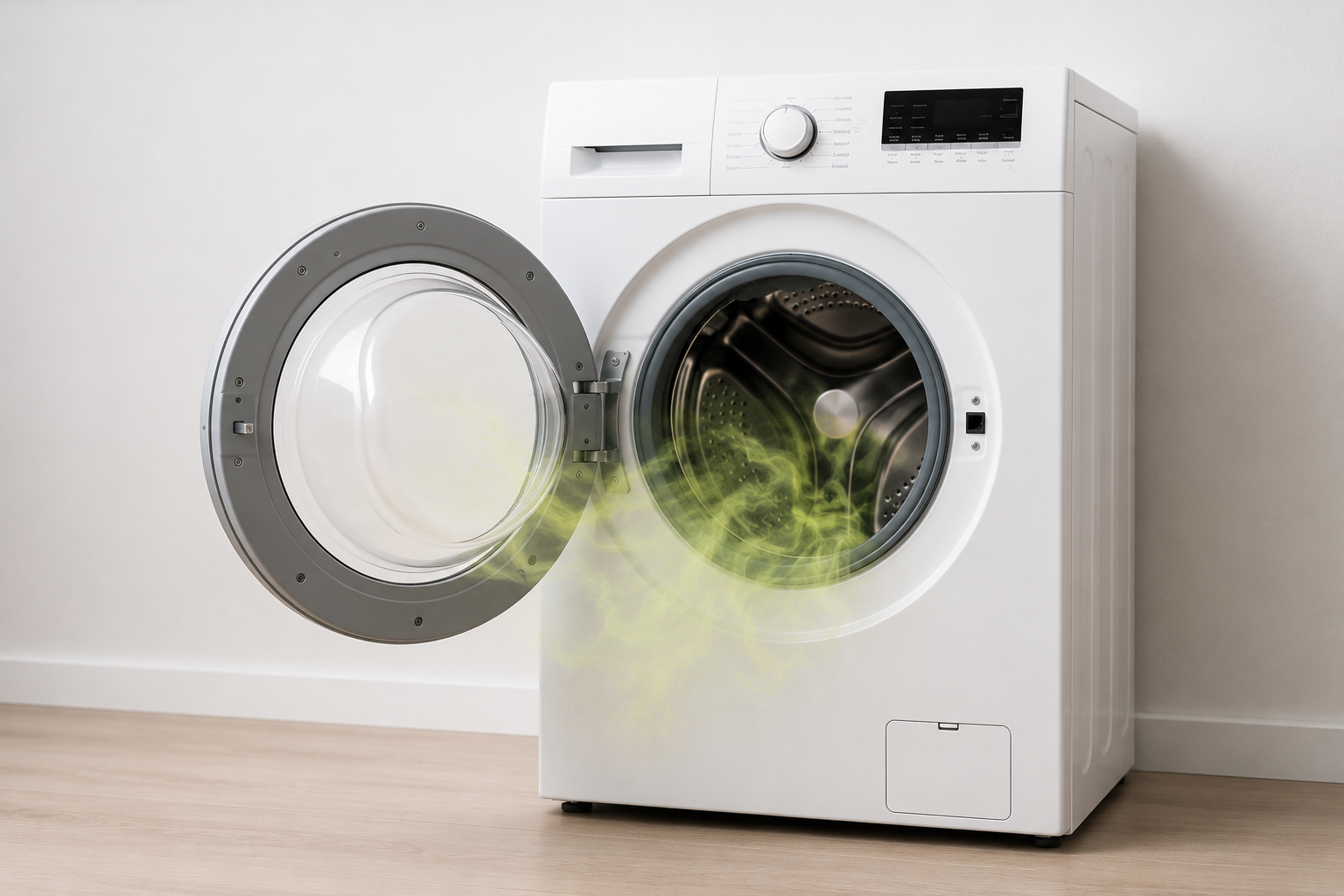
Why Washing Machines Develop Odours
You’d think that a machine designed to clean things would stay clean itself.
Unfortunately, that’s not always the case.
One of the most common complaints we hear from homeowners is:
“My washing machine smells musty, but it looks clean.”
The good news? The cause is usually simple, and so is the solution.
Modern high-efficiency (HE) washing machines are designed to use less water and less energy than older machines. While that’s great for utility bills, it also means detergent and moisture can sometimes build up inside the washer.
One of the biggest contributors is using too much detergent.
Many people fill the detergent cup to the line, assuming more soap means cleaner clothes. In reality, excess detergent often doesn’t fully rinse away. Instead, it accumulates behind the rubber door seal, inside hoses, and between the inner and outer tubs.
Over time, that residue traps moisture and creates the perfect environment for mould, mildew, and unpleasant odours.
5 Simple Ways to Prevent Washer Odours
1. Use Less Detergent
This is the biggest change most homeowners can make.
For most loads, 1–2 tablespoons of HE detergent is all that’s needed.
Using more detergent doesn’t make clothes cleaner; it simply leaves more residue behind.
2. Leave the Door Open Between Loads
After finishing a load, leave the washer door slightly open.
This allows moisture to escape and improves airflow inside the drum, helping prevent mould growth.
If your washer has a detergent dispenser drawer, leave that open as well.
3. Clean the Door Gasket
The rubber gasket around the door is one of the most common places for moisture, lint, and detergent residue to collect.
Simply wipe it down with a clean cloth and check for debris hidden in the folds.
4. Run a Tub Clean Cycle
Most modern washers include a Tub Clean or Self Clean cycle.
Running this cycle once per month helps remove detergent buildup and keeps the interior of the machine fresh.
If your washer doesn’t have a dedicated cleaning cycle, run an empty load on the hottest and longest cycle available.
We always recommend using a reputable wash machine cleaner for optimal tub cleaning results.
5. Clean the Drain Filter
Many front-load washers have a drain filter located behind a small access panel near the bottom of the machine.
Cleaning this filter periodically removes lint, hair, and debris that can contribute to odours and drainage issues.
Check your owner’s manual for instructions specific to your model.
What About Vinegar?
Many homeowners use white vinegar to help control odours.
If you choose to use vinegar, it should only be added during an empty Tub Clean or Self Clean cycle.
For regular maintenance, we recommend using a washer cleaner specifically designed for high-efficiency washing machines.
Do I Really Need HE Detergent?
Absolutely.
High-efficiency washers are engineered to work with low-sudsing detergents.
Regular detergent produces excessive foam, which can leave residue behind, reduce cleaning performance, and place additional strain on internal components.
Using the proper HE detergent and using the correct amount is one of the easiest ways to extend the life of your washer.
A Few Minutes of Maintenance Can Add Years to Your Washer
Most washer odours can be prevented with just a few minutes of maintenance each month.
Using less detergent, improving airflow, running cleaning cycles, and keeping filters clean will help your machine stay fresh, operate efficiently, and avoid costly repairs down the road.
If your washer continues to smell, leak, or isn’t cleaning properly, our team at Kelowna Refrigeration & Appliance Service is always happy to help.
When to call a professional
When Should You Call a Professional?
While regular maintenance can solve many common washer odour issues, some problems require professional attention.
Consider calling a technician if:
- You notice visible mould growth that you cannot safely access or remove
- Water remains in the drum after a cycle
- The washer is leaking water
- The machine is displaying error codes
- Your clothes still smell musty after washing
- The washer is making unusual noises during operation
- You suspect a drain, pump, or internal component issue
In some cases, odours can be caused by clogged drain systems, failing pumps, damaged door gaskets, or buildup in areas of the machine that aren’t accessible without partial disassembly.f
Addressing these issues early can help prevent more expensive repairs down the road and keep your washer operating efficiently for years to come.
We serve Kelowna, West Kelowna, Penticton, Vernon, and throughout the Okanagan Valley. Most service calls are booked within 1–2 business days.
At Kelowna Refrigeration & Appliance Services, we’ve been helping Okanagan homeowners keep their appliances running for over 30 years. In that time, we’ve seen a lot of fridges fail — and most of them gave plenty of warning before they did. Here are the five signs you shouldn’t ignore.
The motor runs constantly
Your fridge should cycle on and off throughout the day. If you notice it running non-stop and your energy bills are creeping up, the condenser coils may be dirty or the thermostat could be failing. Left unchecked, this puts serious strain on the compressor — the most expensive part of the unit to replace.
Quick check: Listen for the motor. If it’s been running for more than 30 minutes straight, it’s worth investigating.
Food is spoiling faster than normal
If your milk is going off days before the expiry date or your vegetables are wilting quickly, your fridge isn’t maintaining the right temperature. This is often caused by a failing door seal, a malfunctioning thermostat, or a refrigerant issue. A technician can diagnose the root cause quickly with the right tools.
Quick check: Place a thermometer in the middle shelf. Your fridge should read between 1°C and 4°C (34°F–40°F).
Unusual moisture or ice buildup inside
Condensation on the interior walls or unexpected frost in your fridge compartment (not the freezer) points to a problem with the defrost system or a worn door gasket. Excess moisture can also lead to mould growth over time — a health concern on top of an appliance issue.
Quick check: Run your finger along the door seal. If it’s cracked, stiff, or not sealing flush, it likely needs replacing.
Tip from our technicians
A simple dollar bill test can reveal a failing door seal: close the door on a bill. If it slides out easily, the gasket isn’t sealing properly and should be replaced.
Unusual noises
A healthy fridge hums quietly. Clicking, buzzing, rattling, or loud knocking are red flags. A clicking sound when the compressor tries to start may indicate it’s struggling. Rattling could point to a loose fan or component. These are worth having looked at before they become bigger failures.
Quick check: If you hear a repeated clicking every few minutes with no successful start-up, turn the fridge off and call a technician.
Water pooling under or inside the fridge
A small amount of condensation is normal, but puddles under or inside your refrigerator usually mean a clogged defrost drain or a cracked water line (if your fridge has a water or ice dispenser). This can quickly cause water damage to your floors and cabinetry if ignored.
Quick check: Pull the fridge away from the wall and check the floor underneath. Any pooling water warrants a service call.
When to call a professional
If you’re seeing one or more of these signs, it’s always better to act early. A minor repair caught in time is far less costly than a full compressor replacement — or a fridge full of spoiled groceries. Our technicians service all major brands including Sub-Zero, Viking, Thermador, Miele, and all standard residential models.
We serve Kelowna, West Kelowna, Penticton, Vernon, and throughout the Okanagan Valley. Most service calls are booked within 1–2 business days.